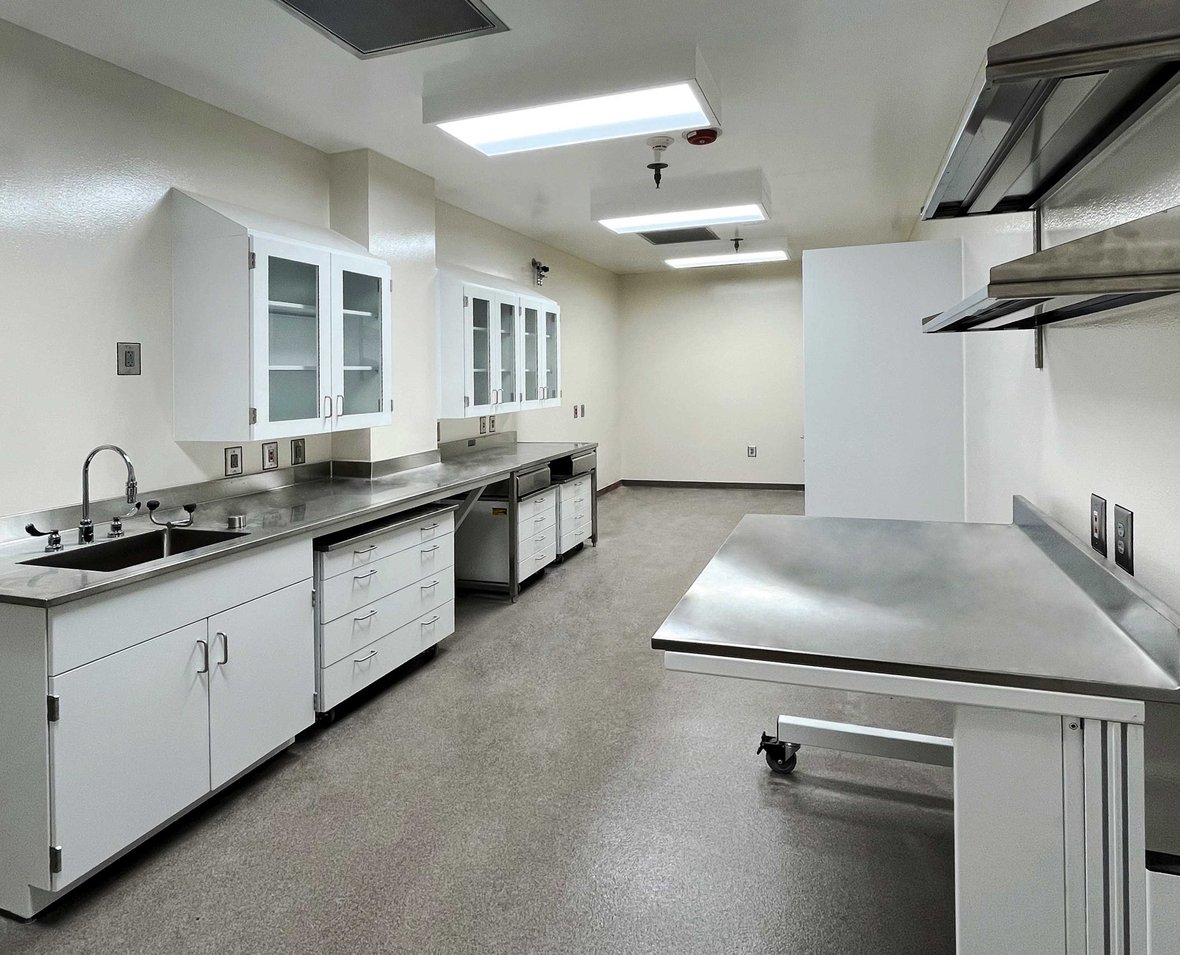
BSL-3 Laboratory (prior to final clean)
Biosafety Lab Construction Done Right
Biosafety laboratories require specialized design and construction standards to support safe, compliant environments across a range of containment levels, from BSL-1 facilities supporting basic research to BSL-3 laboratories designed for high-containment work.
Biosafety Lab Construction Across Containment Levels
Each biosafety level introduces different requirements for containment, airflow, materials and operational control. As containment levels increase, so does the need for tighter environmental separation, more controlled system performance and greater coordination between design and construction.
These environments are not defined by a single system or component. They depend on how building systems, finishes and workflows come together to support safe operation and prevent cross-contamination.
HVAC Isolation and Directional Airflow at the BSL-3 Level
At the BSL-3 level, a critical component is the complete isolation of the HVAC system, specifically engineered to prevent cross-contamination through directional airflow. Airflow is tightly controlled and monitored, with negative pressure gradients ensuring contaminants remain within designated containment zones.
Materials and Systems That Support Containment
Seamless, non-porous finishes are used throughout to support rigorous sanitization protocols and reduce microbial harboring. Pass-through chambers with interlocking doors provide secure material transfer while minimizing exposure risks. Every element, from self-closing doors to pressure monitoring systems, is selected to maintain air quality, containment integrity and compliance with biosafety protocols.
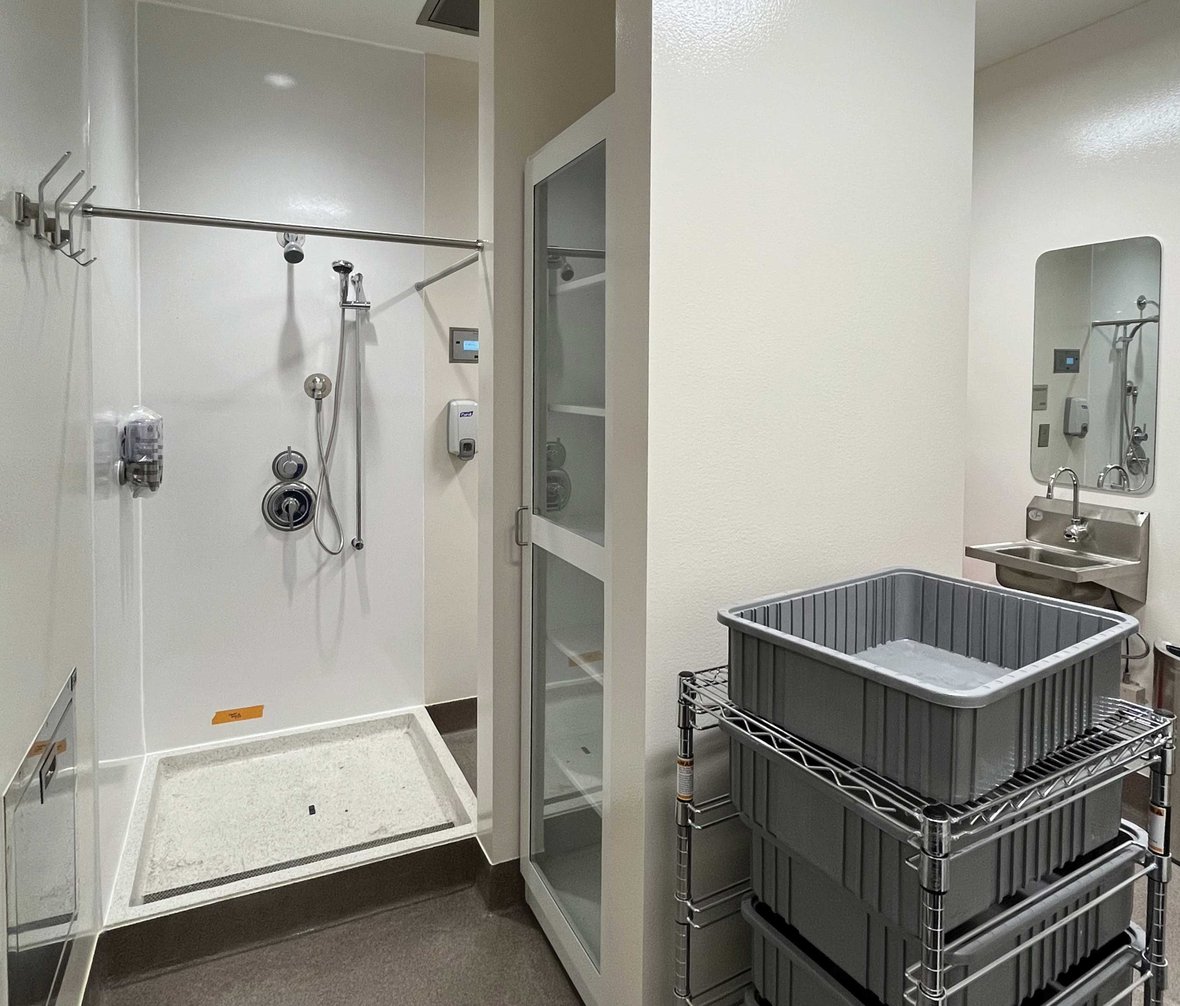
BSL-3 Anteroom
Third-Party Verification for High-Containment Labs
Upon completion, a certified third-party testing and balancing firm verifies that all systems meet CDC and NIH standards for high-containment laboratory environments.
Key Takeaways
- Supports biosafety laboratory environments across BSL-1 through BSL-3 containment levels
- Requires complete HVAC isolation and directional airflow control at the BSL-3 level
- Uses seamless non-porous finishes to support sanitization and reduce microbial harboring
- Includes pass-through chambers, self-closing doors and pressure monitoring systems to support containment
- Relies on third-party testing and balancing to verify CDC and NIH performance standards
Learn more about healthcare construction and specialized environments.
###
Date: Fall 2025 | Beneath The Hard Hat® Magazine
«•»
Follow C.D. Smith ON SOCIAL
#CDSmith #ThinkSafeWorkSafe


Frequently Asked Questions About Biosafety Lab Construction
What is biosafety lab construction?
Biosafety lab construction involves building environments that support safe, compliant research and containment across different biosafety levels, including BSL-1 through BSL-3 facilities.
Why is HVAC isolation important in a BSL-3 laboratory?
At the BSL-3 level, complete HVAC isolation helps prevent cross-contamination through directional airflow. Tightly controlled airflow and negative pressure gradients help keep contaminants within designated containment zones.
What materials are commonly used in biosafety laboratories?
Biosafety labs often use seamless, non-porous finishes to support sanitization protocols and reduce microbial harboring. Other elements may include pass-through chambers, self-closing doors and pressure monitoring systems.
How is a biosafety lab verified before use?
Upon completion, a certified third-party testing and balancing firm verifies that systems meet CDC and NIH standards for high-containment laboratory environments.